
The period between 2020 and 2025 has marked a watershed moment for mass timber construction, characterized by its definitive transition from a niche, experimental material to a mainstream, high-performance building system. We found examples around the globe of award-winning commercial and residential projects from this era that feature glue-laminated timber (glulam) as a core structural and aesthetic component. The findings reveal a sophisticated and mature industry, driven by a convergence of sustainability mandates, a market demand for biophilic design, and significant advancements in engineering and digital fabrication.
The versatility of glue-laminated timber is vividly demonstrated across a wide range of non-residential projects that have garnered significant acclaim in recent years. From event arenas to urban office buildings and museums, glulam is enabling architects and engineers to create structures that are not only sustainable and efficient but also artistically expressive. The following case studies provide an in-depth analysis of five exemplary projects, examining their design mandates, structural systems, and the innovations that led to their recognition.
1. Idaho Central Credit Union Arena, Moscow, ID: Mastery of the Long Span
| Project Dossier: ICCU Arena | |
| Location | Moscow, Idaho, USA |
| Completion Year | 2021 |
| Building Type | Institutional / Sports & Entertainment |
| Key Awards | 2023 Woodworks Wood Design Award; 2023 ACEC Idaho Grand Award; 2022 AIA St. Louis Distinguished Award |
| Architect(s) | Opsis Architecture; Hastings+Chivetta Architects (sports architect) |
| Structural Engineer(s) | StructureCraft; KPFF Consulting Engineers |
Design Mandate and Architectural Realization
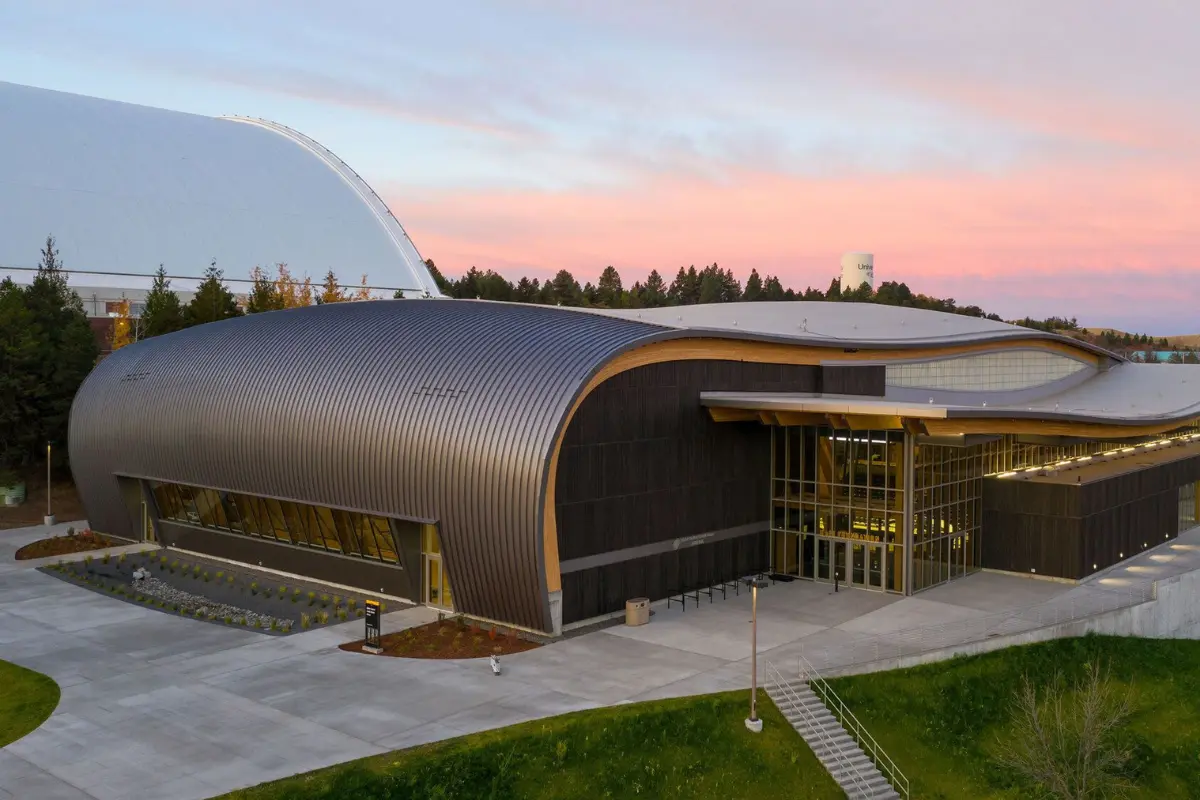
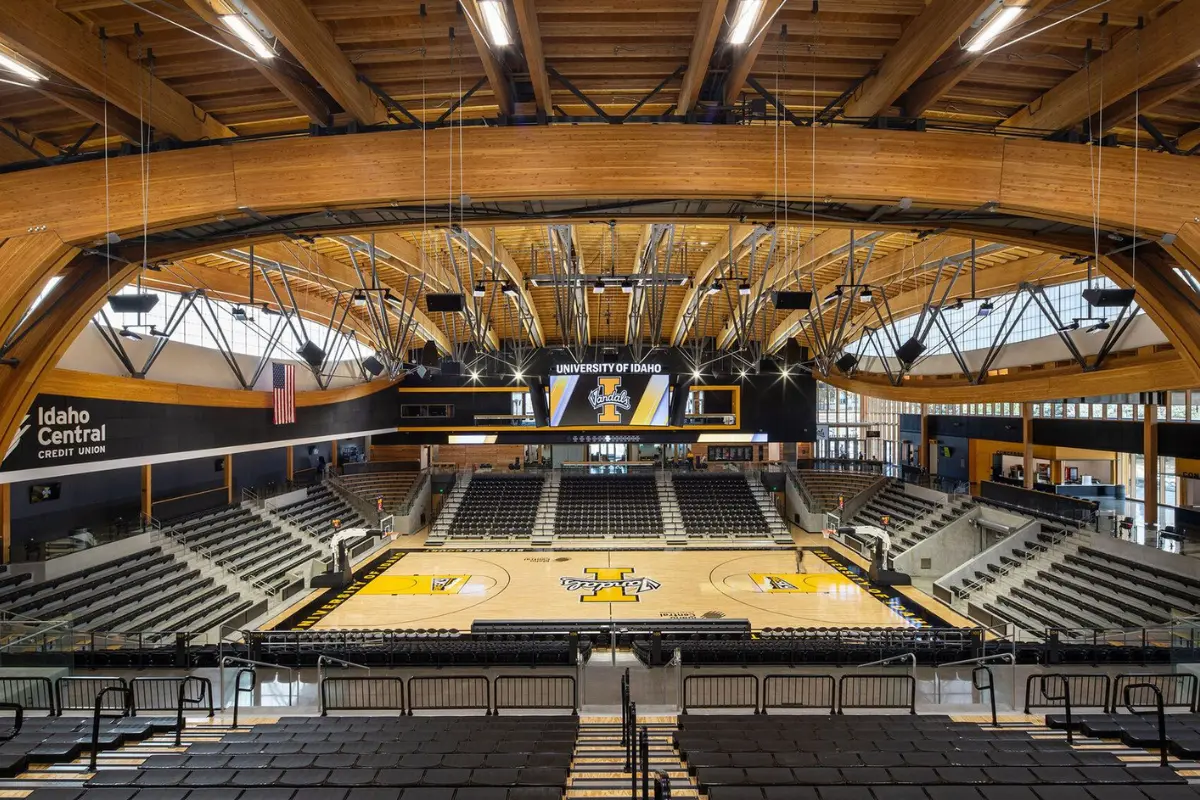
The primary mandate for the Idaho Central Credit Union (ICCU) Arena at the University of Idaho was twofold: to create a state-of-the-art, 4,000-seat venue for university athletics and events, and to serve as a powerful showcase for Idaho’s robust timber industry. The design, by Opsis Architecture, eschewed the “windowless steel box” prototype typical of such facilities, opting instead for a form that is deeply connected to its place. The arena’s most prominent feature is its dramatic, undulating roof, an architectural gesture inspired by the rolling hills of the surrounding Palouse landscape. The extensive use of exposed wood throughout the interior creates a warm, inviting atmosphere that is visually stunning and acoustically comfortable, reflecting the project’s commitment to creating a unique and welcoming public space.
Structural Spotlight—Glulam in Application
The architectural vision for the ICCU Arena was made possible by a mass timber structural system, with glulam as the hero component. The roof structure is a masterclass in long-span timber engineering. It is composed of a monumental frame system featuring 854 glulam beams in total, weighing 442 tons. The primary structure consists of long-span king-post trusses supported by portal frames built from dual glulam members, some up to six feet deep, that span 130 feet across the arena bowl.
These massive portal frames transfer over 400,000 pounds of load into their supporting legs. The largest individual glulam beam in the project measures an impressive 110 inches by 60 inches and is 58 feet long. The complex, unique curvature of each beam required a fully integrated digital workflow, where a 3D structural model generated the precise geometry for CNC fabrication. This project was possible through regional collaboration; the timber was harvested from local, sustainably managed forests, including the University’s own Experimental Forest, and manufactured into glulam beams by Idaho-based companies like Boise Cascade and QB Corporation.
Innovation and Acclaim
The ICCU Arena has been celebrated as a landmark achievement in mass timber design, earning a host of awards for its architecture, structural engineering, and sustainable design Its primary innovation lies in demonstrating the immense potential of glulam for creating complex, large-scale, and long-span structures that are both structurally efficient and architecturally expressive. By leveraging a major capital project to stimulate and highlight local industry, the University of Idaho has created a model for how institutional clients can drive economic development and sustainable innovation simultaneously. The international recognition it has received provides powerful validation for the region’s timber industry and sets a new benchmark for the design of athletic facilities worldwide.
2. 80 M Street, Washington D.C.: The Mass Timber Overbuild Solution
| Project Dossier: 80 M Street | |
| Location | Washington, D.C., USA |
| Completion Year | 2022 |
| Building Type | Commercial (Office Overbuild) |
| Key Awards | 2023 Woodworks Wood Design Regional Excellence Award |
| Architect(s) | Hickok Cole |
| Structural Engineer(s) | Arup |
Design Mandate and Architectural Realization
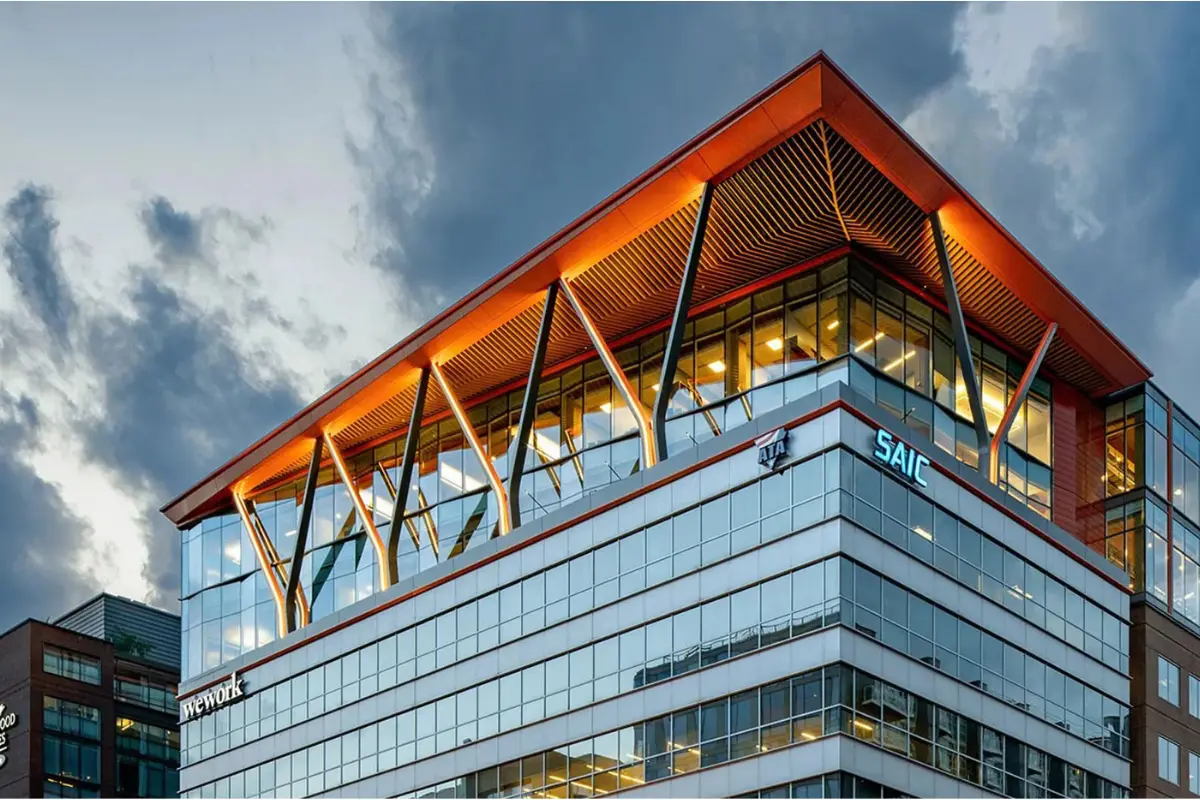
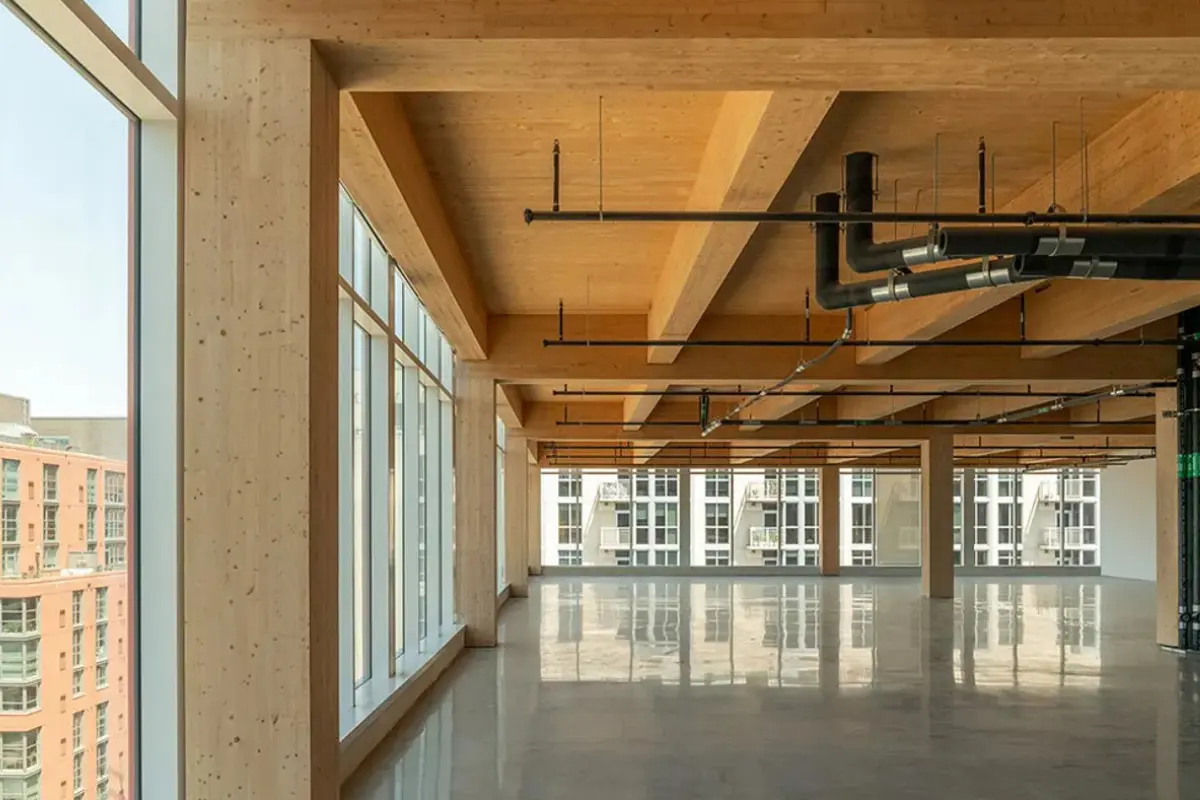
The project at 80 M Street in Washington, D.C.’s Capitol Riverfront District was born from a common urban challenge: how to add density and value to an existing building in a land-scarce, highly regulated market. The mandate from developer Columbia Property Trust was to vertically expand the seven-story, 2001-era office building to create new, high-value “trophy class” office space. Architect Hickok Cole’s solution was a 100,000-square-foot, three-story addition constructed primarily from mass timber, the first in D.C. The design intentionally exposes the timber structure, featuring glulam beams, columns and CLT ceilings, to differentiate the new space in a market dominated by concrete, and to create a biophilic, light-filled work environment. The overbuild also adds nearly 4,000 square feet of outdoor amenity space, including a rooftop terrace, further enhancing its marketability.
Structural Spotlight—Glulam in Application
The choice of a mass timber structural system was driven by a critical engineering constraint: the existing building’s foundation and frame could not support the immense weight of a conventional concrete-and-steel addition without extensive, costly, and disruptive reinforcement. Glulam’s high strength-to-weight ratio was the key that unlocked the project’s feasibility. The glulam post-and-beam frame, supporting CLT floor and roof panels, is significantly lighter than a concrete equivalent, allowing the addition to be built atop the existing structure with minimal interventions. The system uses glulam for all beams, columns, arches, and trusses. A variety of wood species were used, including Douglas Fir, Spruce Pine Fir, and Southern Yellow Pine. The design also leveraged the timber system to achieve generous 16-foot floor-to-floor heights, which dramatically increases daylight penetration compared to a typical office space.
Innovation and Acclaim
80 M Street is a pioneering example of adaptive reuse and sustainable urban densification. Its most significant innovation is demonstrating that mass timber overbuilds are a commercially viable and structural solution for adding value to the vast stock of underutilized mid-rise buildings in cities worldwide. The project successfully navigated the city’s regulatory process, becoming one of the first to be permitted under the new 2021 IBC Type IV-B code provisions, which required two-hour fire resistance ratings for the timber frame and connections. This involved physical fire testing to validate the performance of the connections, setting an important precedent for future projects. By introducing mass timber to the “concrete city” of D.C., 80 M Street has created a highly marketable product that has resonated with tenants and has already spurred greater interest in timber construction in the region.
3. Wisdome Stockholm, Sweden: Engineering Complex Curvature
| Project Dossier: Wisdome Stockholm | |
| Location | Stockholm, Sweden |
| Completion Year | 2023 |
| Building Type | Cultural / Museum Extension |
| Key Awards | 2024 Dezeen Awards, Cultural Project of the Year |
| Architect(s) | Elding Oscarson |
| Structural Engineer(s) | Florian Kosche (Timber Construction Engineer) |
Design Mandate and Architectural Realization
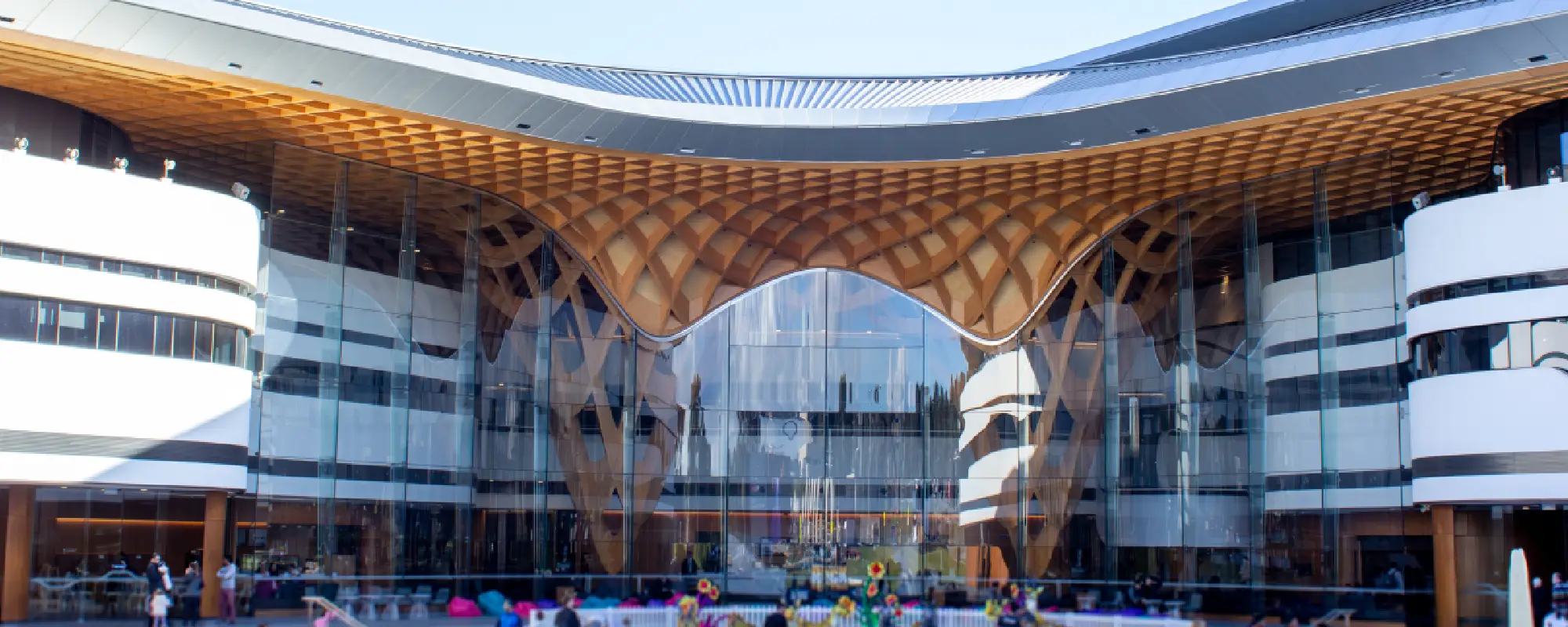
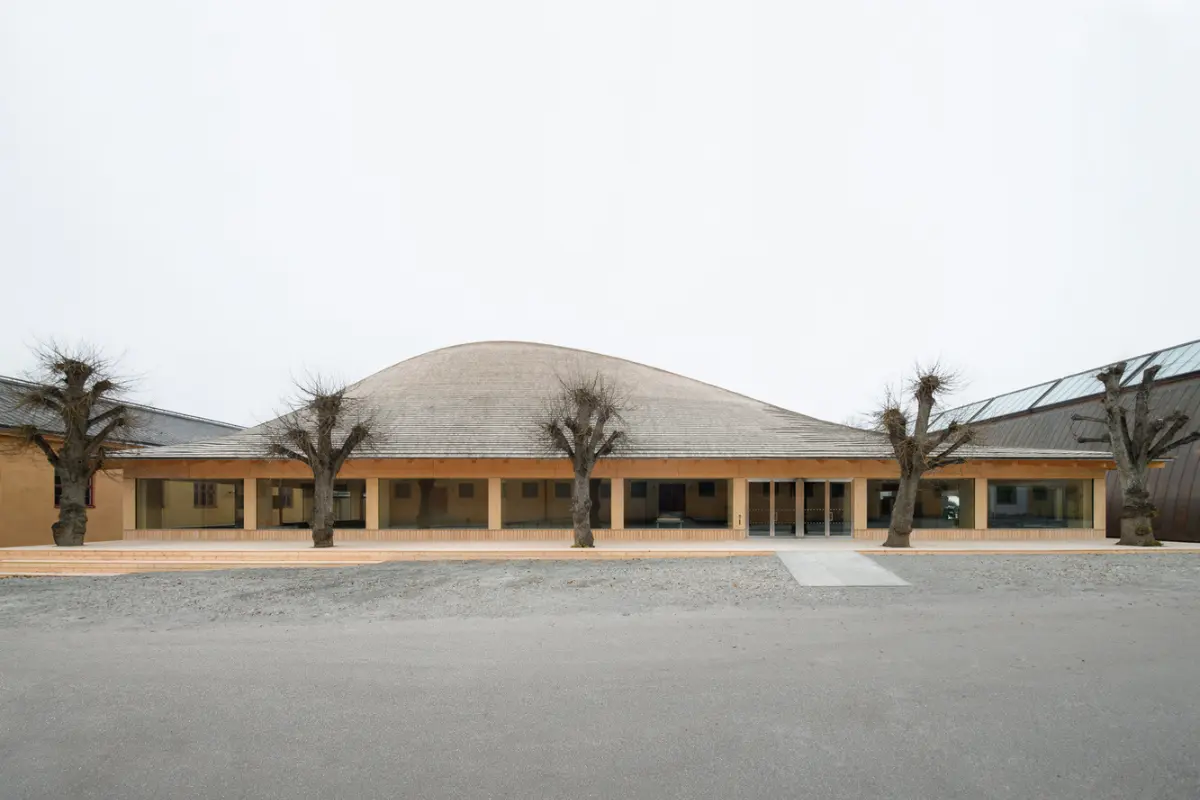
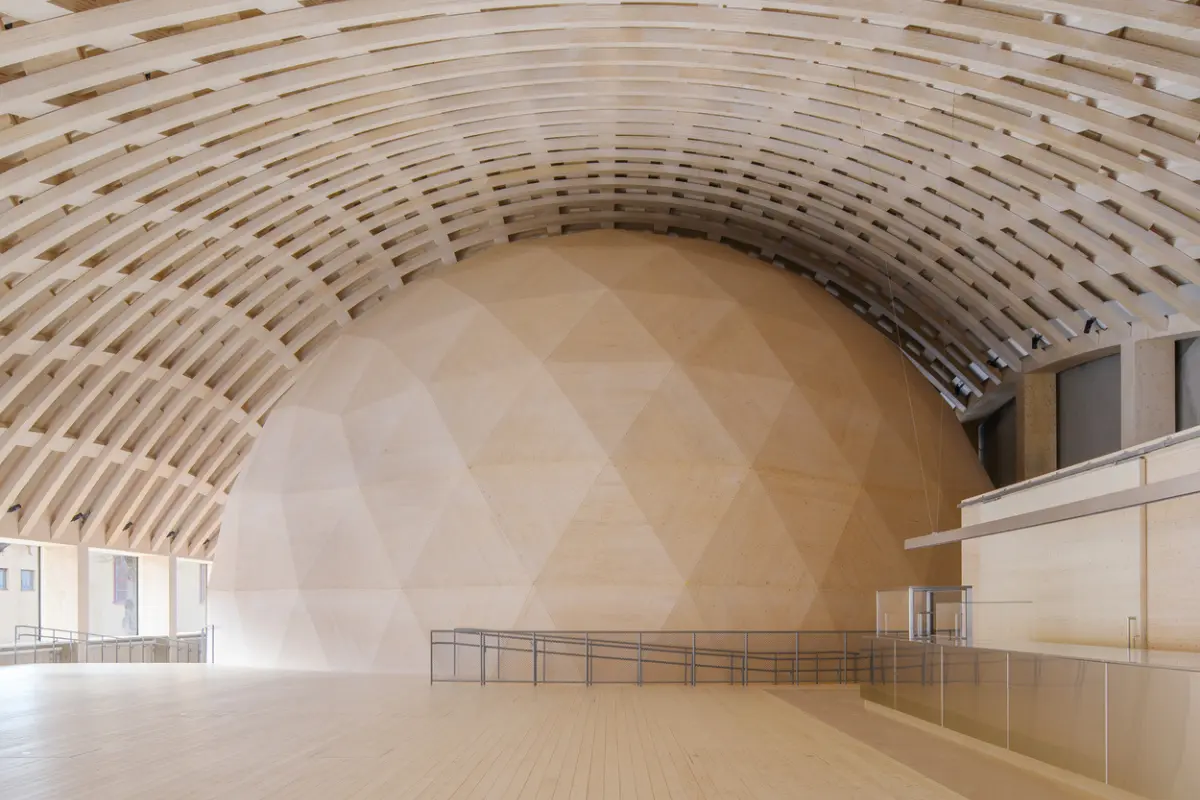
The Wisdome is an extension to Sweden’s National Museum of Science and Technology, designed as an exhibition space and as a “technical attraction.” The architectural centerpiece is a spectacular, free-form wooden roof that wraps over a hemispherical dome housing a 3D cinema. The design, a collaboration between Elding Oscarson Architects and timber engineer Florian Kosche, pushes the boundaries of wood engineering to create a structure that is both a functional enclosure and a breathtaking demonstration of what is possible with modern timber construction. The building’s organic form is a deliberate showcase, reminiscent of Frei Otto’s landmark Multihalle in Mannheim, intended to inspire a new appreciation for the art and science of construction.
Structural Spotlight—Glulam in Application
The structure of the Wisdome’s roof is a complex timber gridshell, with the primary material being Laminated Veneer Lumber (LVL), its application and engineering principles are directly comparable to (and an evolution of) glulam technology. Sources note that LVL is similar to glulam but uses much thinner lamellae, making it even more resilient and dimensionally stable for such a demanding application. The double-curved roof is formed from five layers of criss-crossing LVL beams, totaling 20 kilometers in length, which achieve a clear span of 48 meters. Unlike traditional glulam free-form structures where beams are pre-curved by CNC machines, the LVL lamellae for the Wisdome were transported to the site flat and then bent and twisted into their final complex shape during assembly. The entire gridshell is supported on 24 massive columns made of block-laminated LVL. The dome itself is constructed from 277 unique triangular CLT panels.
Innovation and Acclaim
The Wisdome has been called “rocket science in wood engineering” and is considered one of the most significant timber projects in Sweden. Its innovation lies in its novel construction method for a free-form gridshell, which required unprecedented levels of precision in digital modeling and on-site assembly. The use of LVL in this manner, bent and twisted in place, represents a significant advancement over conventional glulam fabrication techniques. The project’s success in creating such a complex, large-span structure has earned it international recognition, including the 2024 Dezeen Award for Cultural Project of the Year. It stands as a powerful testament to the collaborative potential between visionary architects and specialist engineers in pushing the boundaries of timber construction.
4. Fraser Mills Presentation Centre, Coquitlam, BC: Sculptural Expression and Cantilevered Forms
| Project Dossier: Fraser Mills Presentation Centre | |
| Location | Coquitlam, British Columbia, Canada |
| Completion Year | 2024 (based on award year) |
| Building Type | Commercial (Presentation Centre) |
| Key Awards | 2024 NCSEA Structural Engineering Excellence Award, Outstanding Structure |
| Architect(s) | Patkau Architects |
| Structural Engineer(s) | StructureCraft |
Design Mandate and Architectural Realization
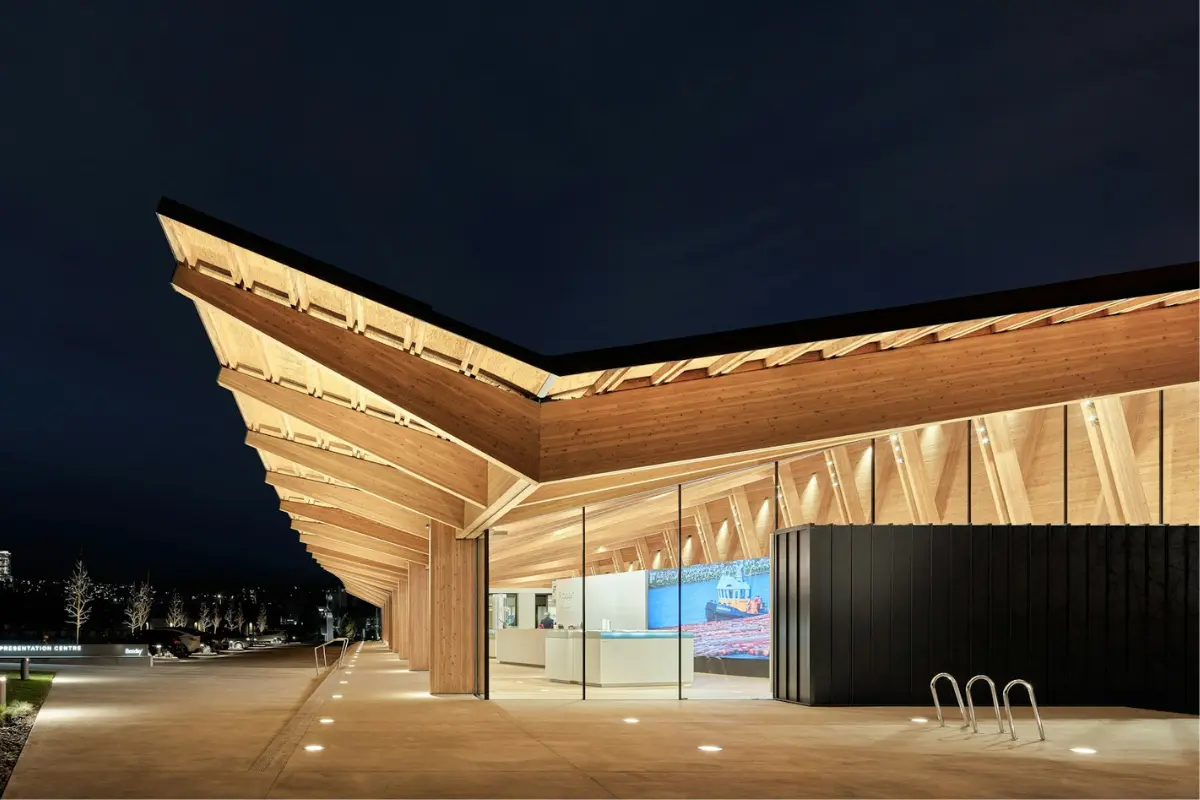
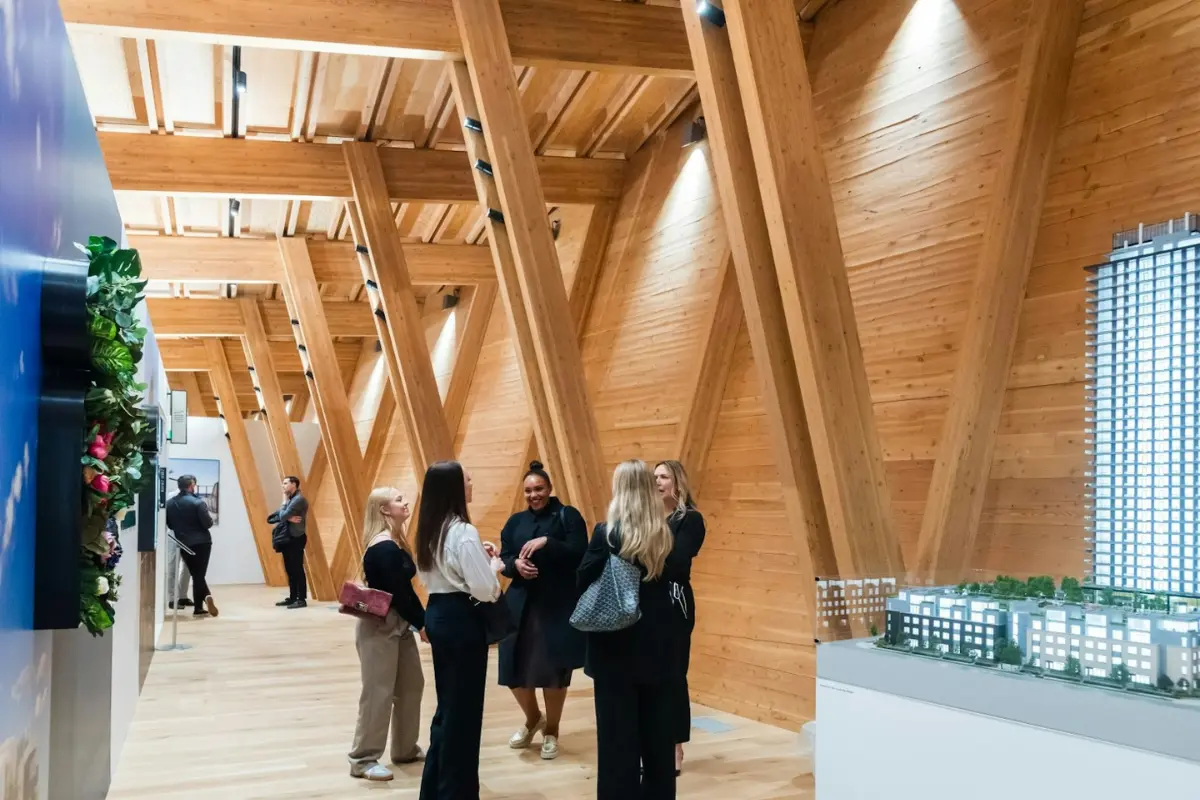
The Fraser Mills Presentation Centre is the gateway to a new 96-acre waterfront community, designed to serve as both a sales center and a landmark for the development. The design by Patkau Architects pays homage to the site’s rich history as a lumber mill, using wood as the primary material to create a structure that is both modern and contextually resonant. The building’s most defining characteristic is its expressive, swooping form, with a graceful solid-wood roof that seems to float above a glazed base. The design creates a powerful visual presence, intended to “shine from a distance” and draw visitors into the space.
Structural Spotlight: Glulam in Application
The building’s sculptural form is realized through a highly innovative glulam structural system. The swooping roof is supported by 26 unique glulam frames that span up to 70 feet. The geometry of these frames required the use of advanced parametric design software (Rhino, Grasshopper) to translate the architectural vision into manufacturable components. A key structural innovation of the project is its lateral system. It is one of the first buildings in British Columbia to use cantilevered glulam columns for lateral support, a departure from more conventional shear walls or steel bracing. These cantilevered columns, along with 33-foot-high splayed glulam columns, support the long-span frames and contribute to the building’s dynamic aesthetic. All timber elements are crafted from locally sourced Douglas Fir, reinforcing the connection to the region’s forestry heritage.
Innovation and Acclaim
The Fraser Mills Presentation Centre earned an Outstanding Structure award from the National Council of Structural Engineers Associations (NCSEA) for its inventive and sophisticated use of mass timber. The project’s primary innovation is its demonstration of glulam’s potential. The successful implementation of cantilevered glulam columns as a primary lateral system represents a great engineering achievement, expanding the toolkit for designers working with mass timber. The project is a prime example of how structural engineering can be seamlessly integrated with architectural expression, resulting in a building where the structure is the architecture.
5. Pavillon Jardins, Paris, France: Hybrid Structures for Bioclimatic Design
| Project Dossier: Pavillon Jardins | |
| Location | Paris, France |
| Completion Year | 2024 |
| Building Type | Commercial (Workplace) |
| Key Awards | 2024 Dezeen Awards, Workplace Project of the Year |
| Architect(s) | Atelier du Pont |
| Structural Engineer(s) | EVP ingénierie |
Design Mandate and Architectural Realization
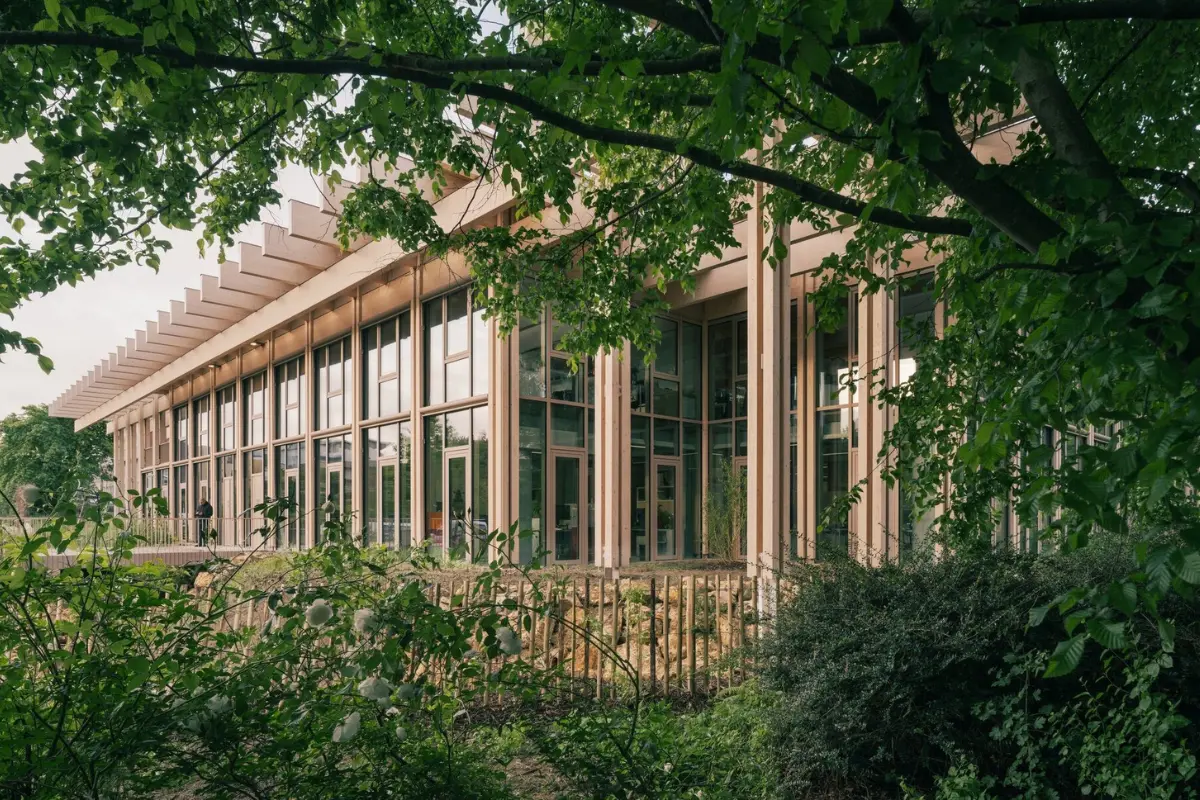
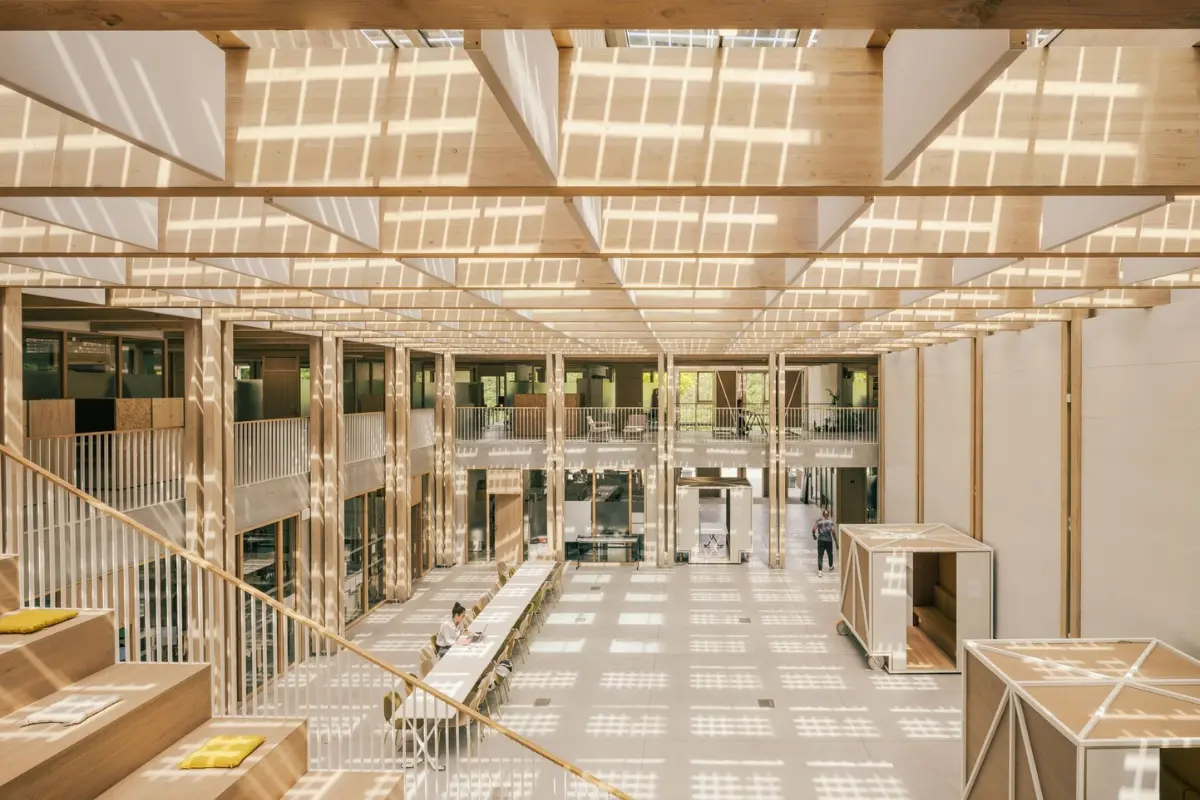
Located in the Parc de la Villette, the Pavillon Jardins was designed as a new operations building, or “base camp,” for the park’s staff. The core mandate from the client was to create a highly efficient and sustainable workplace with a low environmental impact that would return 5,000 square meters of green space to the public. The architectural response by Atelier du Pont is a compact, two-level building organized around a large central atrium. The design is deeply rooted in bioclimatic principles, using the building’s form and materials to regulate its internal environment naturally. The interplay of light and structure creates an “undergrowth atmosphere,” blurring the line between the interior workspace and the surrounding parkland.
Structural Spotlight—Glulam in Application
The Pavillon Jardins employs a hybrid structural system, featuring two interwoven structures: a concrete frame chosen for its strength and thermal inertia, and a timber frame chosen for its lightness and low carbon footprint. The timber structure, made from 500 cubic meters of PEFC-certified Douglas fir from central France, allows for impressive 12-meter spans, which frees the interior floor plates from columns and creates highly flexible and open-plan workspaces. This long-span capability points to the use of an engineered wood product like glulam. The building’s environmental approach is comprehensive, incorporating low-tech features like natural ventilation (no air-conditioning), a vegetated roof, and a photovoltaic glass roof over the atrium that generates electricity. Interior fittings are also predominantly bio-based, using a variety of PEFC-certified woods.
Innovation and Acclaim
Winner of the 2024 Dezeen Award for Workplace Project of the Year, Pavillon Jardins is celebrated for its thoughtful and sophisticated approach to sustainable design. Its key innovation lies in the intelligent use of a hybrid concrete-and-timber structure not to achieve extreme height, but to optimize environmental performance and architectural quality. The project demonstrates how the thermal mass of concrete can be synergistically combined with the lightness, sustainability, and aesthetic warmth of a glulam frame to create a building that is both beautiful and highly responsive to its climate. It serves as an exemplary model for the future of the workplace: flexible, connected to nature, and built with a deep commitment to environmental responsibility.
Themes Observed from Case Studies
These case studies reveal a consistent set of strategies and principles that underpin their success. These recurring themes constitute a blueprint for excellence in mass timber design and execution.
- The first theme observed is the necessity of Early Integrator Collaboration. The complexity and precision required for mass timber construction, particularly with prefabricated elements, demand a departure from traditional, siloed project delivery models. The success of these projects was predicated on the formation of a tight-knit team that included the architect, structural engineer, general contractor, and mass timber fabricator from the earliest stages of design. This integrated approach allows for the optimization of the structural grid, the detailing of connections, and the planning of logistics and assembly sequences long before construction begins, minimizing errors and maximizing efficiency.
- A second theme to rise up is the principle of Exposed Structure as Finish. Across nearly all the projects, the glulam beams, columns, and CLT panels are left exposed as the final interior surface. This offers multiple benefits: it reduces the need for additional finishing materials like gypsum board and suspended ceilings, thereby lowering costs and embodied carbon; it accelerates construction schedules; and it directly leverages the powerful biophilic appeal of wood, creating the warm, natural, and highly marketable environments that are a key driver of mass timber’s adoption.
- Lastly, the Power of Prefabrication is a universal theme of these projects’ success. The off-site manufacturing of glulam and CLT components in a controlled factory environment leads to a higher quality product with tighter tolerances than is possible with on-site construction. This industrial process dramatically accelerates on-site assembly, reduces construction waste, improves worker safety, and minimizes disruption to surrounding communities. The ability to erect an entire floor of a high-rise in under a week is a transformative advantage that makes mass timber highly competitive with conventional construction methods.
What Can We Learn From These Case Studies?
The rapid evolution of mass timber presents both opportunities and challenges for Architects, Engineers, and Construction (AEC) professionals. To capitalize on the potential of this transformative building method, industry leaders should consider the following strategies:
- For Architects: The most successful projects demonstrate that the greatest innovation is happening in hybrid systems. Architects can embrace the opportunity to combine mass timber with steel and concrete, leveraging each material for its optimal performance. Critically, design teams need to engage with mass timber fabricators and suppliers early in the conceptual phase to gain a deep understanding of the manufacturing possibilities and constraints of glulam and CLT. This early collaboration is essential for developing efficient, cost-effective, and buildable designs.
- For Engineers: The paths provided by updated building codes (more on that soon) have been essential for mainstreaming mass timber. However, the next wave of innovation will require a move toward performance-based design, particularly in the fields of structural and fire engineering. Using advanced analysis and modeling to prove the safety and resilience of novel structural systems and connection details can expand the architectural possibilities and further optimize the efficiency of mass timber construction.
- For Developers: The business case for mass timber becoming clearer and compelling. Developers can leverage the dual value proposition of the material: it offers tangible construction efficiencies that can accelerate project delivery and improve financial returns, while simultaneously creating a premium, sustainable, and highly desirable product for the end-user. To maximize these benefits, developers should actively explore innovative sourcing and supply chain strategies, and champion the adoption of progressive building codes in their local jurisdictions to reduce regulatory friction.
By embracing these strategies, architects, engineers, and developers can not only deliver exceptional individual projects but also contribute to the broader advancement of a more sustainable, efficient, and human-centric built environment.
Works cited
- Fact Sheet | Building Sustainably: Mass Timber (September 2023) | White Papers | EESI, accessed September 9, 2025, https://www.eesi.org/papers/view/fact-sheet-building-sustainably-mass-timber-september-2023
- Mass Timber Products: Innovative Wood-Based Building Materials, accessed September 9, 2025, https://content.ces.ncsu.edu/mass-timber-products-innovative-wood-based-building-materials
- Mass timber construction a rising trend in sustainable building | The Christman Company, accessed September 9, 2025, https://www.christmanco.com/mass-timber-construction-a-rising-trend-in-sustainable-building
- Sustainable Architecture, Design + Forestry – Think Wood, accessed September 9, 2025, https://www.thinkwood.com/sustainable-architecture-design
- INTRO, Cleveland | USA | binderholz.com, accessed September 9, 2025, https://www.binderholz.com/en-us/mass-timber-solutions/intro-cleveland-usa/
- INTRO Cleveland’s Mass Timber Apartment Brings Greener and More Sustainable Living to Ohio – ICC – International Code Council, accessed September 9, 2025, https://www.iccsafe.org/building-safety-journal/bsj-dives/intro-clevelands-mass-timber-apartment-brings-greener-and-more-sustainable-living-to-ohio/
- TIMBER PROJECT IN WASHINGTON, DC – 80M Street, accessed September 9, 2025, https://80mstreet.com/wp-content/uploads/2021/04/80M-Brochure-c.pdf
- 1030 Music Row (2023) – International Mass Timber Conference, accessed September 9, 2025, https://masstimberconference.com/report/content/1030-music-row/
- INTRO | Apartments In Cleveland, OH, accessed September 9, 2025, https://www.introcleveland.com/
- Glulam – APA – The Engineered Wood Association, accessed September 9, 2025, https://www.apawood.org/glulam
- Glulam engineered wood beams products – Transforming Construction – Woodtone, accessed September 9, 2025, https://woodtone.com/glulam-engineered-wood-products/
- Oregon State University – Cascades Edward J. Ray Hall – Kalesnikoff, accessed September 9, 2025, https://kalesnikoff.com/projects/oregon-state-university-osu-cascades-edward-j-ray-hall/
- 80 M Street – Think Wood, accessed September 9, 2025, https://www.thinkwood.com/construction-projects/80-m-street
- ICCU Arena | University of Idaho, accessed September 9, 2025, https://www.uidaho.edu/campus-facilities/athletic-facilities/iccu-arena
- Structural Engineering Excellence (SEE) Awards – NCSEA, accessed September 9, 2025, https://www.ncsea.com/education-events/structural-engineering-excellence-see-awards/
- Maritime Center of Excellence – Grodsky, accessed September 9, 2025, https://grodsky.com/case-studies/maritime-center-of-excellence/
- Wood’s Fire performance | Building & Construction – Naturally Wood, accessed September 9, 2025, https://www.naturallywood.com/wood-performance/fire-performance/
- Modern codes and mass timber buildings – Consulting – Specifying Engineer -, accessed September 9, 2025, https://www.csemag.com/modern-codes-and-mass-timber-buildings/
- Ascent – Think Wood, accessed September 9, 2025, https://www.thinkwood.com/construction-projects/ascent
- Ascent – Arup, accessed September 9, 2025, https://www.arup.com/projects/ascent/
- Ascent | Timberlab, accessed September 9, 2025, https://timberlab.com/projects/ascent
- 2025 Predictions for Mass Timber – Woodworking Network, accessed September 9, 2025, https://www.woodworkingnetwork.com/news/woodworking-industry-news/2025-predictions-mass-timber
- 1030 Music Row – StructureCraft, accessed September 9, 2025, https://structurecraft.com/projects/music-row-office
- 80 M Street – Equilibrium Consulting Inc., accessed September 9, 2025, https://equilibrium-eq.com/projects/80m-street/
- Winning Projects – Wood Design & Building 2025 | Volume 24, Issue 95, accessed September 9, 2025, https://cwc.maglr.com/wood-design-building-2025-volume-24-issue-95/winning-projects
- 2025 Mass Timber Trends: What to Expect | Binkley Construction, accessed September 9, 2025, https://binkleyconstruction.com/news/mass-timber/2025-mass-timber-trends-what-to-expect/
- Beyond sustainability: four remarkable benefits of mass timber | www.usa.skanska.com, accessed September 9, 2025, https://www.usa.skanska.com/who-we-are/media/constructive-thinking/beyond-sustainability-four-remarkable-benefits-of-mass-timber/
- Idaho Central Credit Union Arena – Soaring Roof Demonstrates Mass Timber’s Long-Span Possibilities | Research Library | Think Wood, accessed September 9, 2025, https://research.thinkwood.com/en/permalink/catalogue2994
- Idaho Central Credit Union Arena | QB Corp., accessed September 9, 2025, https://www.qbcorp.com/projects/idaho-central-credit-union-arena
- The Wisdome is a timber engineering showcase – UBM Timber …, accessed September 9, 2025, https://www.timber-pioneer.de/en/wisdome-shows-pioneering-expertise/
- The Wisdome is a timber engineering showcase – ubm magazin., accessed September 9, 2025, https://www.ubm-development.com/magazin/en/wisdome-stockholm/
- Extension to Swedish science museum features unique timber framing – ASCE, accessed September 9, 2025, https://www.asce.org/publications-and-news/civil-engineering-source/civil-engineering-magazine/issues/magazine-issue/article/2025/01/extension-to-swedish-science-museum-features-unique-timber-framing
- Dezeen Awards 2024 architecture winners revealed, accessed September 9, 2025, https://www.dezeen.com/2024/11/26/dezeen-awards-2024-architecture-winner/
- Fraser Mills Presentation Centre, Canada – BEGA, accessed September 9, 2025, https://www.bega.com/en/references/fraser-mills-presentation-centre-canada/
- Fraser Mills Presentation Centre – BEGA-US.com, accessed September 9, 2025, https://www.bega-us.com/projects/fraser-mills-presentation-centre
- Le Pavillon Jardins, a New Building in the Heart of La Villette in Paris, Designed by the Architectural Studio Atelier du Pont – Exagono Magazine, accessed September 9, 2025, https://exagono.es/en/le-pavillon-jardins-a-new-building-in-the-heart-of-la-villette-in-paris-designed-by-the-architectural-studio-atelier-du-pont/
- Atelier Du Pont, Charly Broyez, Vincent Leroux, Frédéric Delangle …, accessed September 9, 2025, https://divisare.com/projects/506062-atelier-du-pont-charly-broyez-vincent-leroux-frederic-delangle-pavillon-jardins
- Timber Revolution – Dezeen, accessed September 9, 2025, https://www.dezeen.com/timber-revolution/
- Ascent – Mass Timber WIN Project | WoodWorks Innovation Network, accessed September 9, 2025, https://www.woodworksinnovationnetwork.org/projects/ascent
- BCIT Tall Timber Student Housing – Ledcor, accessed September 9, 2025, https://www.ledcor.com/our-projects/project-gallery/project-gallery-environmental/bcit-tall-timber-student-housing
- Tall Timber building boosts student housing at BCIT’s Burnaby campus – BC Gov News, accessed September 9, 2025, https://news.gov.bc.ca/releases/2025PSFS0010-000787
- Tall Timber Student Housing – BCIT, accessed September 9, 2025, https://www.bcit.ca/campus-plan/tall-timber-student-housing/
- Brooklyn Mass Timber House | Brooklyn, New York | 2023 – The International Architecture Awards, accessed September 9, 2025, https://www.internationalarchitectureawards.com/project/57032
- Brooklyn Mass Timber House | Brooklyn, New York, USA | 2023 – The International Architecture Awards, accessed September 9, 2025, https://www.internationalarchitectureawards.com/project/62699
- Mass timber construction: balancing sustainability and structural integrity – Salas O’Brien, accessed September 9, 2025, https://salasobrien.com/news/mass-timber/
- Sustainable Building Awards (2025) – BUILD Magazine, accessed September 9, 2025, https://www.build-review.com/awards/sustainable-building-awards/
- Inspiring Innovation: Competition Winners Showcase Mass Timber’s Versatility – Think Wood, accessed September 9, 2025, https://www.thinkwood.com/blog/inspiring-innovation-competition-winners-showcase-mass-timbers-versatility