
We are back with four examples from around the globe of award-winning residential projects that feature glue-laminated timber (glulam) as a core structural and aesthetic component. These examples showcase a growing industry, driven by a combination of sustainability directives, a growing market demand for biophilic design, and new advances in engineering and fabrication.
The application of glue-laminated timber in the residential sector has been equally transformative, enabling the construction of taller, more sustainable, and more desirable living spaces. From record-breaking high-rises to innovative urban infill and historic renovations, glulam-based systems are addressing the critical challenges of housing density and quality of life. The following case studies explore four groundbreaking residential projects that have set new standards for what is possible in mass timber living.
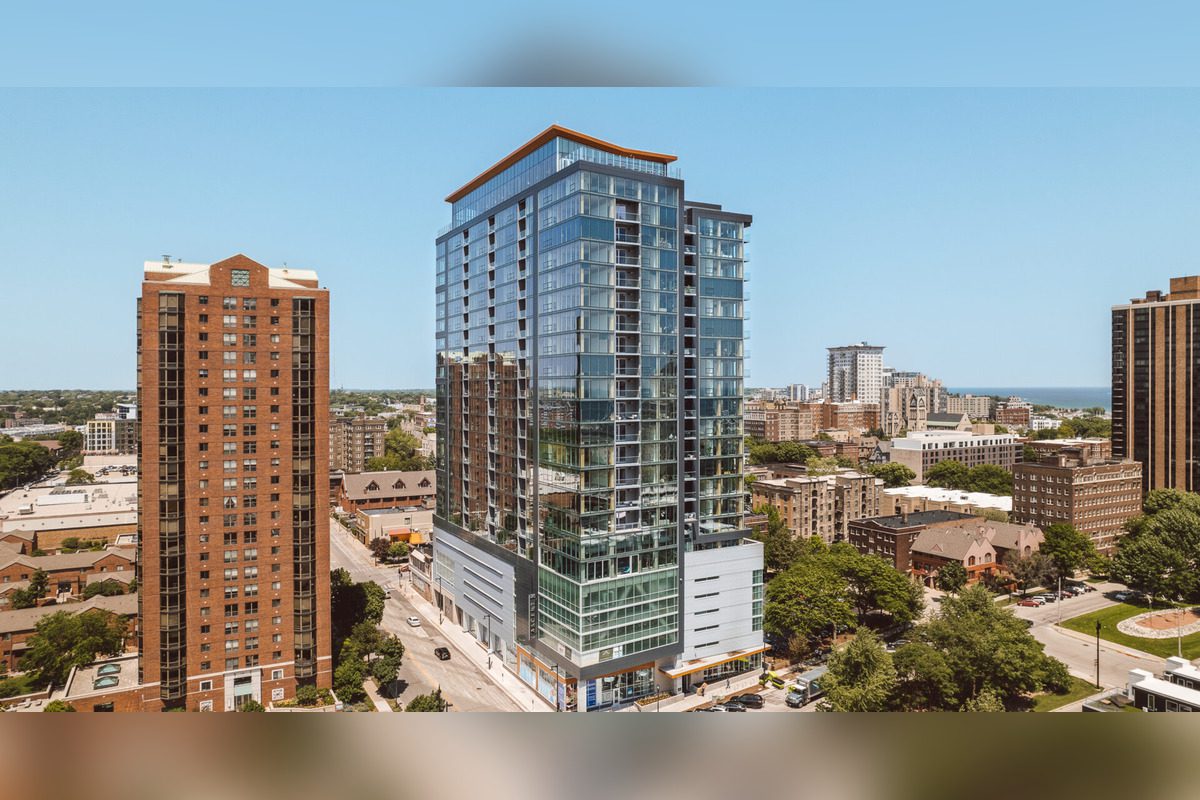
1. Ascent, Milwaukee, WI: Reaching New Heights in Hybrid Timber Towers
| Location | Milwaukee, Wisconsin, USA |
| Completion Year | 2022 |
| Building Type | Residential (Mixed-Use High-Rise) |
| Key Awards | 2023 Woodworks Wood Design Award, Innovation |
| Architect(s) | Korb + Associates Architects |
| Structural Engineer(s) | Thornton Tomasetti |
Design Mandate and Architectural Realization
The vision for Ascent was ambitious from the outset: to create a landmark residential tower that would stand out in the Milwaukee skyline and appeal to a new generation of tenants drawn to the natural beauty and sustainability of wood construction.19
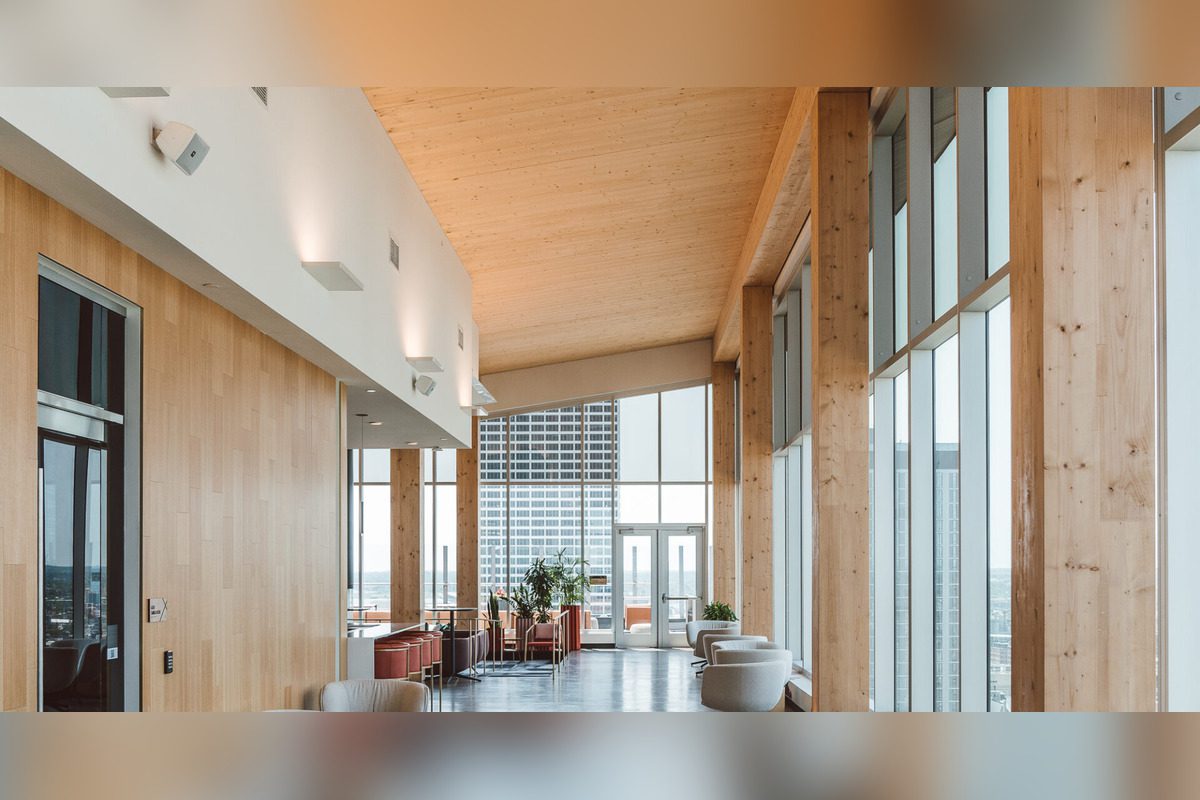
At 25 stories and 284 feet, the project was certified upon completion as the world’s tallest hybrid mass timber building. The 493,000-square-foot building contains 259 luxury apartments, ground-floor retail, and extensive amenities, including a top-floor community space with panoramic views.19 A central goal of the design was to expose the mass timber structure wherever possible, making the warmth of the wood a defining feature of the living spaces.
Structural Spotlight—Glulam in Application
Ascent’s record-setting height was achieved through an innovative hybrid structural system. The building consists of a six-story concrete podium (housing parking and retail) that supports a 19-story mass timber tower above.20 The timber structure is a post-and-beam system composed of white spruce glulam columns and beams, which in turn support cross-laminated timber (CLT) floor and ceiling panels.19 The glulam elements were procured from Austria and precisely fabricated using CNC machines before being shipped to the site.21 A critical hurdle for the project was securing regulatory approval for a combustible structure of this height. This was overcome through a rigorous performance-based design approach that included extensive analysis and physical testing. Most notably, the project team facilitated a series of fire tests that demonstrated the glulam columns could achieve a three-hour fire-resistance rating—a world first and a key factor in gaining the city’s approval.20
Innovation and Acclaim
Ascent is a seminal project that has fundamentally altered the perception of what is possible with mass timber construction in North America. Its primary innovation was successfully navigating the complex regulatory landscape to deliver a timber-hybrid high-rise, creating a replicable blueprint that has inspired confidence in developers, engineers, and code officials across the country.19 The project received a federal Wood Innovation Grant to support its research, the results of which have been released to the public domain to aid future tall timber development.21 By proving the structural and fire-safety viability of a 25-story timber tower, Ascent has cleared the way for a new generation of taller, more sustainable urban residential buildings.
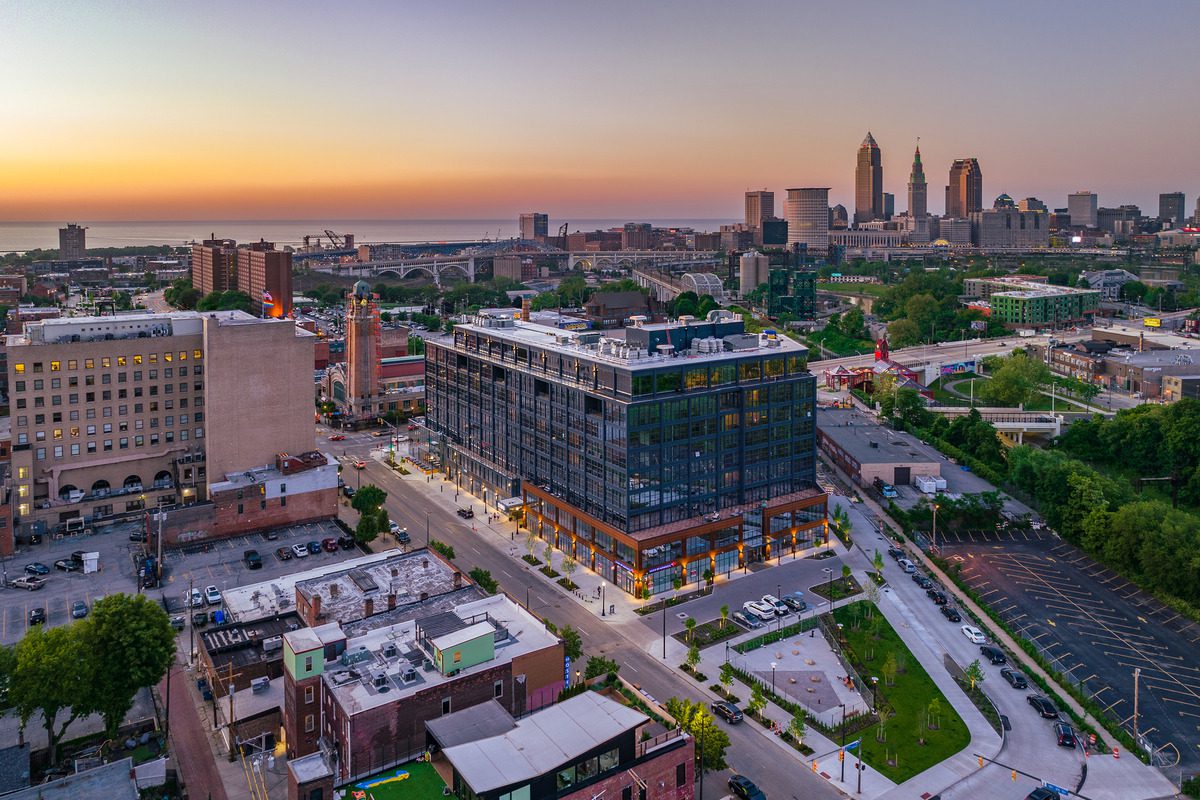
2. INTRO, Cleveland, OH: Mass Timber at the Scale of Urban Living
| Location | Cleveland, Ohio, USA |
| Completion Year | 2022 |
| Building Type | Residential (Mixed-Use Mid-Rise) |
| Key Awards | 2023 Woodworks Wood Design Regional Excellence Award; 2022 US-A BIZ Award |
| Architect(s) | Hartshorne Plunkard Architecture |
| Structural Engineer(s) | Forefront Structural Engineers |
Design Mandate and Architectural Realization
Located opposite Cleveland’s historic West Side Market, INTRO was conceived as a large-scale, mixed-use development that would set a new standard for sustainable urban living in the region.5 At nine stories and 47,000 square meters, it was the largest mass timber construction project in the United States at the time of its completion.5 The complex includes 297 apartments, 10 penthouses, retail space, a rooftop event venue, and public green space.5 The design aesthetic is modern and premium, characterized by contemporary interiors with exposed solid wood ceilings and beams, which create a “bright, beautiful, clean and modern” living environment that feels distinct from any other building in the city.5
Structural Spotlight—Glulam in Application
The building’s structure consists of a single-story concrete podium with an underground car park, supporting eight stories of solid wood construction above.5 The mass timber system is extensive, utilizing a total of 5,650 cubic meters of binderholz CLT for floors and ceilings and 1,500 cubic meters of glulam for beams and supports.5 Nearly half of the building’s interior space features exposed wood, making the structural system a primary aesthetic element.5 The project achieved a LEED Gold certification for its ecological construction, releasing 21% less<
CO2 than an equivalent steel or concrete building.5 The project also pioneered a novel supply chain solution for the U.S. market: the solid wood elements were transported by rail from production plants in Austria and Germany to the port of Amsterdam, then shipped directly to the port of Cleveland on a break bulk vessel.5
Innovation and Acclaim
INTRO’s primary innovation lies in its successful application of mass timber at a significant scale for a mid-rise residential development, proving its viability for large, market-rate housing projects. It effectively demonstrates that mass timber can deliver both sustainability and a high-end aesthetic that commands premium value. The project’s success in navigating building codes prior to the full adoption of the 2021 IBC, using draft recommendations as guidance, helped pave the way for other large timber projects in the U.S..6 Furthermore, its innovative international logistics strategy showcased a new model for a globalized mass timber supply chain, making large volumes of high-quality European timber products more accessible to North American projects.5
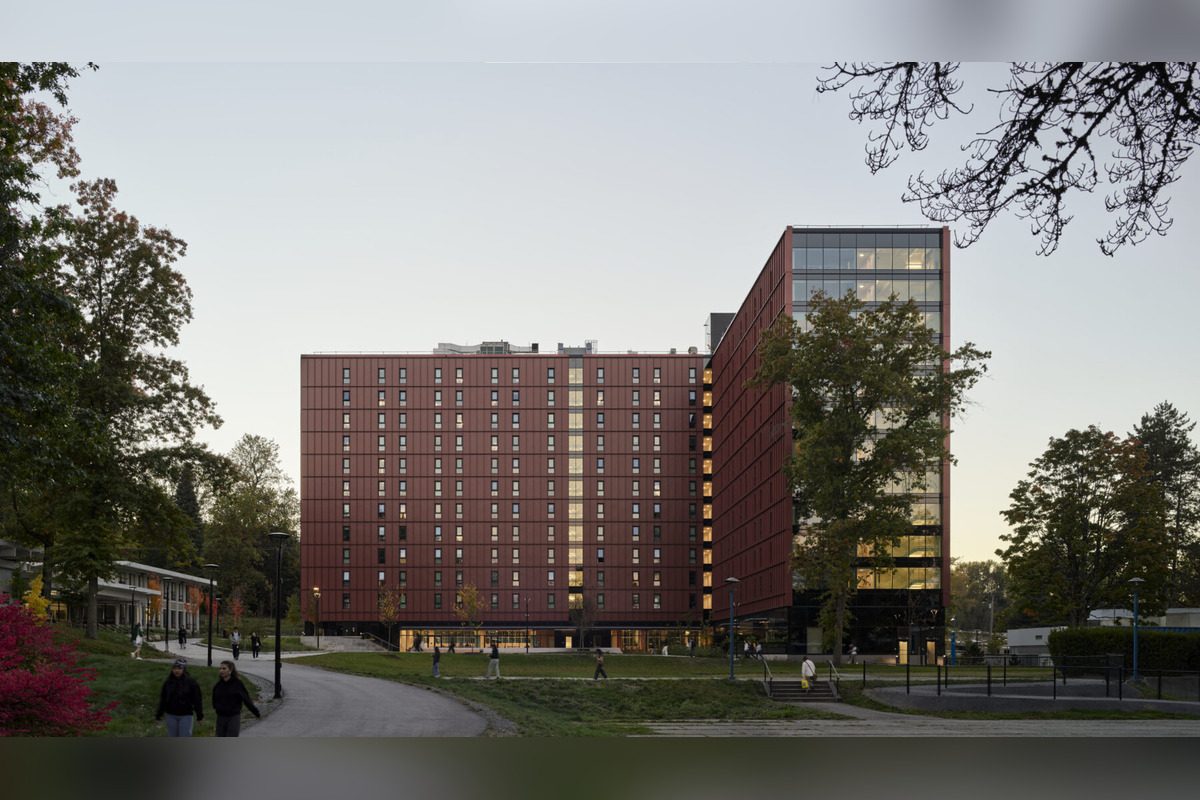
3. BCIT Tall Timber Student Housing, Burnaby, BC: Pioneering Point-Supported CLT Systems
| Location | Burnaby, British Columbia, Canada |
| Completion Year | 2025 (based on award year) |
| Building Type | Residential (Student Housing) |
| Key Awards | 2024 NCSEA Structural Engineering Excellence Award, Outstanding Structure |
| Architect(s) | Not specified in provided materials |
| Structural Engineer(s) | Fast + Epp |
Design Mandate and Architectural Realization
The British Columbia Institute of Technology (BCIT) Tall Timber student housing project was designed to address the pressing need for affordable on-campus housing while simultaneously serving as a showcase for the future of sustainable building technology.40 The 12-story building provides 469 beds, more than doubling the on-campus housing capacity at BCIT.41 As the tallest mass timber building in Burnaby, the project was planned with sustainability at its core, featuring a high-performance envelope, an all-electric design, and meeting the highest level of B.C.’s Energy Step Code.41 The building’s design fosters a collaborative and supportive student community with a mix of single and studio units and extensive common areas.41
Structural Spotlight—Glulam in Application
This project represents a significant advancement in hybrid mass timber construction. While glulam is an integral part of the overall mass timber system, the building’s most heralded innovation is its floor structure. It is the first of a “next generation” of point-supported CLT structures.15 This system utilizes flat, two-way spanning cross-laminated timber (CLT) floor plates that are supported directly on slender steel Hollow Structural Section (HSS) columns, eliminating the need for a traditional grid of beams.15 This approach maximizes floor-to-ceiling heights, simplifies the routing of mechanical and electrical services, and accelerates construction. The lateral load-resisting system consists of steel-braced cores that were prefabricated in five- and six-story lifts to further reduce on-site construction time.15 The entire structure is an example of an “encapsulated” mass timber building, where the structural elements are protected by fire-rated gypsum board.
Innovation and Acclaim
The BCIT Tall Timber Student Housing project earned an Outstanding Structure award from the NCSEA for its significant progress in the field of hybrid-mass timber buildings.15 Its key innovation is the pioneering use of a point-supported CLT flat-plate system at this scale. This moves beyond the conventional post-and-beam approach, offering a more efficient structural solution that has the potential to make mid- and high-rise mass timber construction even more competitive with traditional concrete flat-plate systems. The project’s highly integrated use of prefabrication for both the timber and steel components showcases a sophisticated, systems-based approach to construction that maximizes speed, safety, and quality.
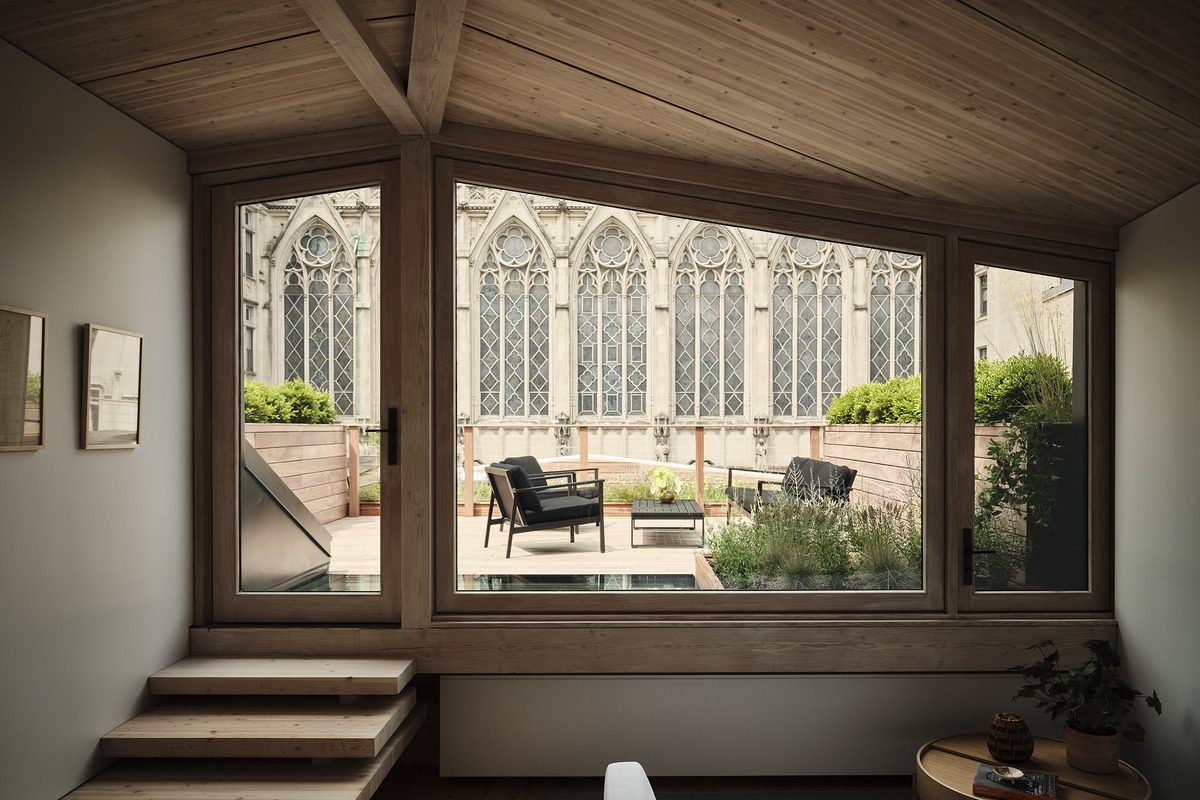
Brooklyn Mass Timber House, New York, NY: A Model for Sustainable Adaptive Reuse
| Location | Brooklyn, New York, USA |
| Completion Year | 2023 |
| Building Type | Residential (Single-Family) |
| Key Awards | 2023 International Architecture Award |
| Architect(s) | Schiller Projects |
| Structural Engineer(s) | Not specified in provided materials |
Design Mandate and Architectural Realization
The Mass Timber House in Brooklyn is a landmark project as the first single-family residence in New York City built using mass timber methods.43 The project involved the adaptive reuse of a historic carriage house dating to the 1870s, marrying the past and future through a combination of historic preservation and modern, sustainable technology.43 The design mandate was to create a beautiful, light-filled, and ecologically friendly home on a budget, serving as a case study for near-zero carbon construction.44 The renovated home is defined by biophilic design interventions, including a large skylight, an open staircase, and a seven-foot-tall maple tree at its center.44 While the interior is thoroughly modern, the exterior façade was carefully restored to adhere to the strict guidelines of the NYC Landmarks Preservation Commission.43
Structural Spotlight—Glulam in Application
The construction methodology replaced carbon-heavy materials like steel and concrete with lighter, long-span, and fire-resistant glue-laminated timber floors.43 A key architectural and structural feature is a three-story Douglas Fir glue-laminated staircase that carves through the center of the house.43 The open, slat-tread design of this glulam stair allows light from a new skylight to penetrate deep into the ground floor, transforming a formerly dark interior.43 The project also demonstrates a commitment to material reuse; historical timber beams from the original 1860s and 1880s structure were salvaged and repurposed as flooring for the new house.44
Innovation and Acclaim
The Brooklyn Mass Timber House, a winner of a 2023 International Architecture Award, is innovative on multiple fronts. Architecturally, it provides a compelling model for how to sensitively integrate modern mass timber construction within a historic urban fabric, navigating complex regulatory environments.43 Structurally, it showcases how glulam elements can be used not just for primary frames but as central, sculptural features that define the character of a space. Perhaps its most pioneering aspect is its material sourcing strategy. The design team inverted the typical process by sourcing the material first. They identified a large university dormitory project and arranged to purchase a small quantity of their mass timber panels directly from the supplier at the same bulk price, coordinating pickup to eliminate extra transport costs. The house was then designed specifically around the dimensions and properties of the procured material.44 This resourceful approach was pivotal in making the project cost-effective and sustainable, setting a new standard for responsible design in smaller-scale projects. The success of mass timber in the competitive residential sector is proving to be driven by this dual value proposition: it offers tangible construction efficiencies for developers while delivering a superior, wellness-oriented living environment that consumers increasingly desire.
A Blueprint for Success: Cross-Cutting Themes in Award-Winning Design
Analysis of the industry’s most celebrated recent projects reveals a consistent set of strategies and principles that underpin their success. These recurring themes constitute a blueprint for excellence in mass timber design and execution.
A foundational theme is the necessity of Early Integrator Collaboration. The complexity and precision required for mass timber construction, particularly with prefabricated elements, demand a departure from traditional, siloed project delivery models. The success of projects like Ascent and 1030 Music Row was predicated on the formation of a tight-knit team—including the architect, structural engineer, general contractor, and mass timber fabricator—from the earliest stages of design.19 This integrated approach allows for the optimization of the structural grid, the detailing of connections, and the planning of logistics and assembly sequences long before construction begins, minimizing errors and maximizing efficiency.
A second dominant theme is the principle of Exposed Structure as Finish. Across nearly all the profiled projects, from the soaring roof of the ICCU Arena to the apartment interiors of Ascent and INTRO, the glulam beams, columns, and CLT panels are left exposed as the final interior surface.5 This strategy offers multiple benefits: it reduces the need for additional finishing materials like gypsum board and suspended ceilings, thereby lowering costs and embodied carbon; it accelerates construction schedules; and it directly leverages the powerful biophilic appeal of wood, creating the warm, natural, and highly marketable environments that are a key driver of mass timber’s adoption.3
Finally, the Power of Prefabrication is a universal enabler of these projects’ success. The off-site manufacturing of glulam and CLT components in a controlled factory environment leads to a higher quality product with tighter tolerances than is possible with on-site construction.22 This industrial process dramatically accelerates on-site assembly, reduces construction waste, improves worker safety, and minimizes disruption to surrounding communities.27 The ability to erect an entire floor of a high-rise in under a week, as was done at Ascent, is a transformative advantage that makes mass timber highly competitive with conventional construction methods.19
Future Trajectories for Glulam and Mass Timber
The trends observed in the 2020-2025 period point toward several key future trajectories for the mass timber industry. These developments are poised to further enhance the material’s capabilities, efficiency, and sustainability.
The high degree of prefabrication inherent in mass timber construction aligns it perfectly with the broader industry shift toward Modular and Industrialized Construction. The practice of manufacturing entire building components or modules off-site is gaining traction as a method to streamline timelines and minimize waste.46 Mass timber systems, with their precisely engineered and fabricated elements, are a natural fit for this evolution. Future projects are likely to see even greater levels of pre-assembly, with services, windows, and even cladding integrated into timber panels in the factory before delivery to the site.47
The design and fabrication process will be further optimized by advancements in Digital Twinning and Artificial Intelligence (AI). The use of BIM is already standard practice, but the development of true digital twins—dynamic virtual models that are updated in real-time throughout a building’s lifecycle—will revolutionize asset management.22 AI algorithms will be increasingly used to optimize structural designs, minimize material waste during fabrication, and manage complex supply chain logistics, making the entire process from design to delivery faster and more intelligent.22
Finally, mass timber is uniquely positioned to lead the industry’s transition toward Circular Economy Principles. Unlike concrete structures that are demolished at the end of their life, mass timber buildings are assembled from discrete components connected with mechanical fasteners. This opens up the possibility for “design for deconstruction,” where buildings are planned from the outset to be easily disassembled.1 Glulam beams and CLT panels can then be recovered and reused in new structures, repurposed as furniture, or down-cycled into other wood products, ensuring that the embodied carbon remains sequestered and that the material’s value is preserved across multiple lifecycles.1
Recommendations for Industry Leaders
The rapid evolution of mass timber presents both opportunities and challenges for AEC professionals. To capitalize on the potential of this transformative building method, industry leaders should consider the following strategic recommendations:
- For Architects: The most successful projects demonstrate that the greatest innovation is happening in hybrid systems. Architects should embrace the opportunity to combine mass timber with steel and concrete, leveraging each material for its optimal performance. Critically, design teams must engage with mass timber fabricators and suppliers early in the conceptual phase to gain a deep understanding of the manufacturing possibilities and constraints of glulam and CLT. This early collaboration is essential for developing efficient, cost-effective, and buildable designs.
- For Engineers: The prescriptive paths provided by updated building codes have been essential for mainstreaming mass timber. However, the next wave of innovation will require a move toward performance-based design, particularly in the fields of structural and fire engineering. By using advanced analysis and modeling to prove the safety and resilience of novel structural systems and connection details—as was done for the fire testing at Ascent and the lateral system at Fraser Mills, engineers can expand the architectural possibilities and further optimize the efficiency of mass timber construction.
- For Developers: The business case for mass timber is now clear and compelling. Developers should recognize and leverage the dual value proposition of the material: it offers tangible construction efficiencies that can accelerate project delivery and improve financial returns, while simultaneously creating a premium, sustainable, and highly desirable product for the end-user. To maximize these benefits, developers should actively explore innovative sourcing and supply chain strategies, as demonstrated by the Brooklyn Mass Timber House, and champion the adoption of progressive building codes in their local jurisdictions to reduce regulatory friction.
By embracing these strategies, architects, engineers, and developers can not only deliver exceptional individual projects but also contribute to the broader advancement of a more sustainable, efficient, and human-centric built environment.
Works cited
- Fact Sheet | Building Sustainably: Mass Timber (September 2023) | White Papers | EESI, accessed September 9, 2025, https://www.eesi.org/papers/view/fact-sheet-building-sustainably-mass-timber-september-2023
- Mass Timber Products: Innovative Wood-Based Building Materials, accessed September 9, 2025, https://content.ces.ncsu.edu/mass-timber-products-innovative-wood-based-building-materials
- Mass timber construction a rising trend in sustainable building | The Christman Company, accessed September 9, 2025, https://www.christmanco.com/mass-timber-construction-a-rising-trend-in-sustainable-building
- Sustainable Architecture, Design + Forestry – Think Wood, accessed September 9, 2025, https://www.thinkwood.com/sustainable-architecture-design
- INTRO, Cleveland | USA | binderholz.com, accessed September 9, 2025, https://www.binderholz.com/en-us/mass-timber-solutions/intro-cleveland-usa/
- INTRO Cleveland’s Mass Timber Apartment Brings Greener and More Sustainable Living to Ohio – ICC – International Code Council, accessed September 9, 2025, https://www.iccsafe.org/building-safety-journal/bsj-dives/intro-clevelands-mass-timber-apartment-brings-greener-and-more-sustainable-living-to-ohio/
- TIMBER PROJECT IN WASHINGTON, DC – 80M Street, accessed September 9, 2025, https://80mstreet.com/wp-content/uploads/2021/04/80M-Brochure-c.pdf
- 1030 Music Row (2023) – International Mass Timber Conference, accessed September 9, 2025, https://masstimberconference.com/report/content/1030-music-row/
- INTRO | Apartments In Cleveland, OH, accessed September 9, 2025, https://www.introcleveland.com/
- Glulam – APA – The Engineered Wood Association, accessed September 9, 2025, https://www.apawood.org/glulam
- Glulam engineered wood beams products – Transforming Construction – Woodtone, accessed September 9, 2025, https://woodtone.com/glulam-engineered-wood-products/
- Oregon State University – Cascades Edward J. Ray Hall – Kalesnikoff, accessed September 9, 2025, https://kalesnikoff.com/projects/oregon-state-university-osu-cascades-edward-j-ray-hall/
- 80 M Street – Think Wood, accessed September 9, 2025, https://www.thinkwood.com/construction-projects/80-m-street
- ICCU Arena | University of Idaho, accessed September 9, 2025, https://www.uidaho.edu/campus-facilities/athletic-facilities/iccu-arena
- Structural Engineering Excellence (SEE) Awards – NCSEA, accessed September 9, 2025, >https://www.ncsea.com/education-events/structural-engineering-excellence-see-awards/
- Maritime Center of Excellence – Grodsky, accessed September 9, 2025, https://grodsky.com/case-studies/maritime-center-of-excellence/
- Wood’s Fire performance | Building & Construction – Naturally Wood, accessed September 9, 2025, https://www.naturallywood.com/wood-performance/fire-performance/
- Modern codes and mass timber buildings – Consulting – Specifying Engineer -, accessed September 9, 2025, https://www.csemag.com/modern-codes-and-mass-timber-buildings/
- Ascent – Think Wood, accessed September 9, 2025, https://www.thinkwood.com/construction-projects/ascent
- Ascent – Arup, accessed September 9, 2025, https://www.arup.com/projects/ascent/
- Ascent | Timberlab, accessed September 9, 2025, https://timberlab.com/projects/ascent
- 2025 Predictions for Mass Timber – Woodworking Network, accessed September 9, 2025, https://www.woodworkingnetwork.com/news/woodworking-industry-news/2025-predictions-mass-timber
- 1030 Music Row – StructureCraft, accessed September 9, 2025, https://structurecraft.com/projects/music-row-office
- 80 M Street – Equilibrium Consulting Inc., accessed September 9, 2025, https://equilibrium-eq.com/projects/80m-street/
- Winning Projects – Wood Design & Building 2025 | Volume 24, Issue 95, accessed September 9, 2025, https://cwc.maglr.com/wood-design-building-2025-volume-24-issue-95/winning-projects
- 2025 Mass Timber Trends: What to Expect | Binkley Construction, accessed September 9, 2025, https://binkleyconstruction.com/news/mass-timber/2025-mass-timber-trends-what-to-expect/
- Beyond sustainability: four remarkable benefits of mass timber | www.usa.skanska.com, accessed September 9, 2025, https://www.usa.skanska.com/who-we-are/media/constructive-thinking/beyond-sustainability-four-remarkable-benefits-of-mass-timber/
- Idaho Central Credit Union Arena – Soaring Roof Demonstrates Mass Timber’s Long-Span Possibilities | Research Library | Think Wood, accessed September 9, 2025, https://research.thinkwood.com/en/permalink/catalogue2994
- Idaho Central Credit Union Arena | QB Corp., accessed September 9, 2025, https://www.qbcorp.com/projects/idaho-central-credit-union-arena
- The Wisdome is a timber engineering showcase – UBM Timber …, accessed September 9, 2025, https://www.timber-pioneer.de/en/wisdome-shows-pioneering-expertise/
- The Wisdome is a timber engineering showcase – ubm magazin., accessed September 9, 2025, https://www.ubm-development.com/magazin/en/wisdome-stockholm/
- Extension to Swedish science museum features unique timber framing – ASCE, accessed September 9, 2025, https://www.asce.org/publications-and-news/civil-engineering-source/civil-engineering-magazine/issues/magazine-issue/article/2025/01/extension-to-swedish-science-museum-features-unique-timber-framing
- Dezeen Awards 2024 architecture winners revealed, accessed September 9, 2025, https://www.dezeen.com/2024/11/26/dezeen-awards-2024-architecture-winner/
- Fraser Mills Presentation Centre, Canada – BEGA, accessed September 9, 2025, https://www.bega.com/en/references/fraser-mills-presentation-centre-canada/
- Fraser Mills Presentation Centre – BEGA-US.com, accessed September 9, 2025, https://www.bega-us.com/projects/fraser-mills-presentation-centre
- Le Pavillon Jardins, a New Building in the Heart of La Villette in Paris, Designed by the Architectural Studio Atelier du Pont – Exagono Magazine, accessed September 9, 2025, https://exagono.es/en/le-pavillon-jardins-a-new-building-in-the-heart-of-la-villette-in-paris-designed-by-the-architectural-studio-atelier-du-pont/
- Atelier Du Pont, Charly Broyez, Vincent Leroux, Frédéric Delangle …, accessed September 9, 2025, https://divisare.com/projects/506062-atelier-du-pont-charly-broyez-vincent-leroux-frederic-delangle-pavillon-jardins
- Timber Revolution – Dezeen, accessed September 9, 2025, https://www.dezeen.com/timber-revolution/
- Ascent – Mass Timber WIN Project | WoodWorks Innovation Network, accessed September 9, 2025, https://www.woodworksinnovationnetwork.org/projects/ascent
- BCIT Tall Timber Student Housing – Ledcor, accessed September 9, 2025, https://www.ledcor.com/our-projects/project-gallery/project-gallery-environmental/bcit-tall-timber-student-housing
- Tall Timber building boosts student housing at BCIT’s Burnaby campus – BC Gov News, accessed September 9, 2025, https://news.gov.bc.ca/releases/2025PSFS0010-000787
- Tall Timber Student Housing – BCIT, accessed September 9, 2025, https://www.bcit.ca/campus-plan/tall-timber-student-housing/
- Brooklyn Mass Timber House | Brooklyn, New York | 2023 – The International Architecture Awards, accessed September 9, 2025, https://www.internationalarchitectureawards.com/project/57032
- Brooklyn Mass Timber House | Brooklyn, New York, USA | 2023 – The International Architecture Awards, accessed September 9, 2025, https://www.internationalarchitectureawards.com/project/62699
- Mass timber construction: balancing sustainability and structural integrity – Salas O’Brien, accessed September 9, 2025, https://salasobrien.com/news/mass-timber/
- Sustainable Building Awards (2025) – BUILD Magazine, accessed September 9, 2025, https://www.build-review.com/awards/sustainable-building-awards/
- Inspiring Innovation: Competition Winners Showcase Mass Timber’s Versatility – Think Wood, accessed September 9, 2025, >https://www.thinkwood.com/blog/inspiring-innovation-competition-winners-showcase-mass-timbers-versatility